The Golden Church of Venice
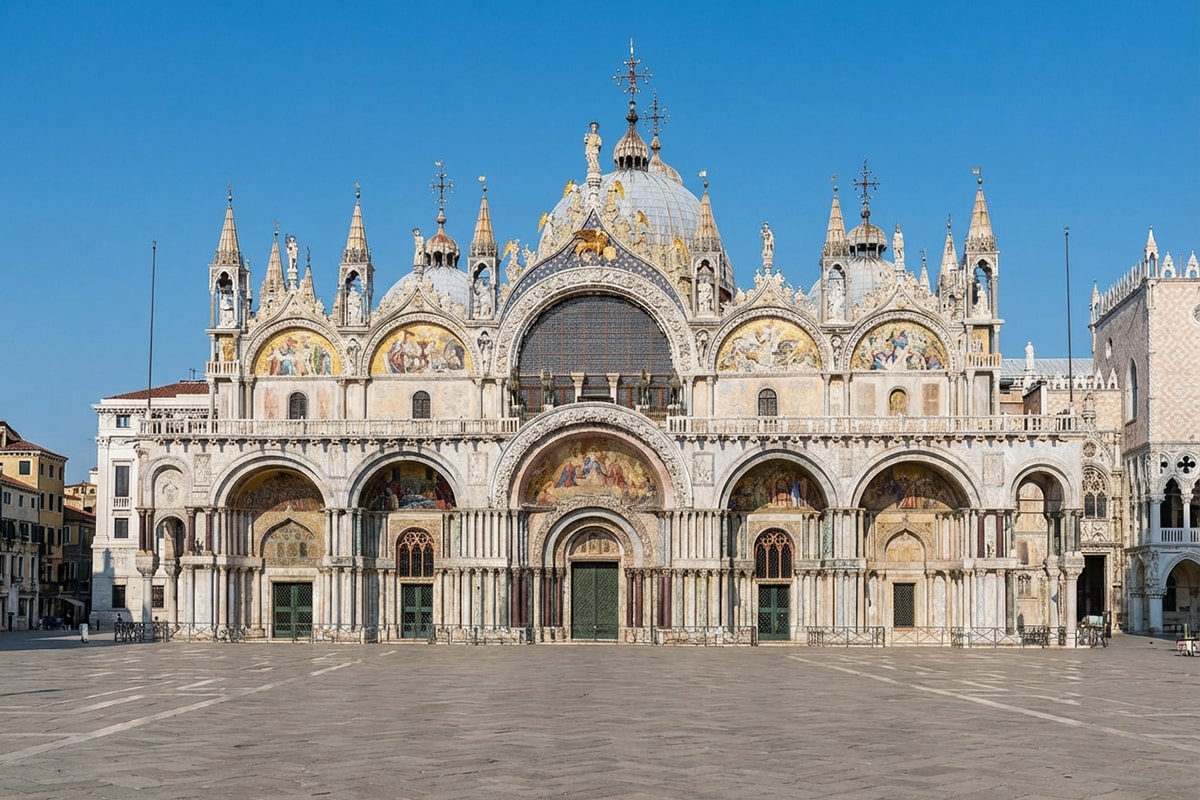
The Patriarchal Cathedral Basilica of Saint Mark (Italian: Basilica Cattedrale Patriarcale di San Marco), commonly known as St Mark's Basilica, is the cathedral church of the Patriarchate of Venice. It became the episcopal seat of the Patriarch of Venice in 1807, replacing the earlier cathedral of San Pietro di Castello. It is dedicated to and holds the relics of Saint Mark the Evangelist, the patron saint of the city.
The church is located on the eastern end of Saint Mark's Square, the former political and religious centre of the Republic of Venice, and is attached to the Doge's Palace. Prior to the fall of the republic in 1797, it was the chapel of the Doge and was subject to his jurisdiction.
Participazio Church (c. 829–976)
The history of St. Mark's Basilica revolves around the translatio, during which two Venetian merchants transported Saint Mark's body from Alexandria, Egypt, to Venice in 828/829. According to the Chronicon Venetum, before the construction of the Doge's Palace on the site of the castrum, Saint Mark's relics resided in a corner tower of the castrum.
Doge Giustiniano Participazio (827–829) stipulated in his will that his widow and his younger brother and successor Giovanni were to erect a church dedicated to Saint Mark wherein the relics would ultimately be housed. Construction of the new church may have actually been underway during Doge Giustiniano's lifetime and was completed by 836 when the relics of Saint Mark were transferred.
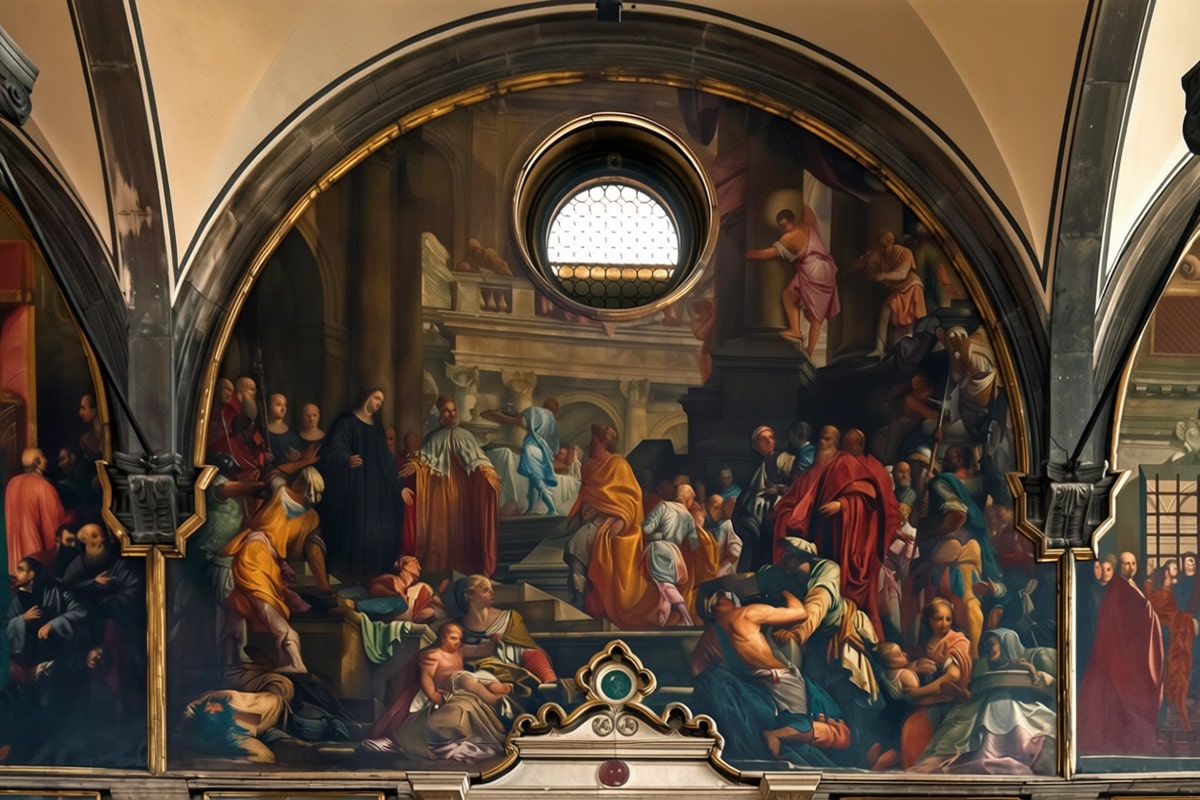
Mosaics depicting the translation of the body
Orseolo Church (976–c. 1063)
The Participazio church was severely damaged in 976 during the popular uprising against Doge Pietro IV Candiano when the fire that angry crowds had set to drive the Doge from the castrum spread to the adjoining church. Although the structure was not completely destroyed, it was compromised.
Within two years, the church was repaired and at the sole expense of the Orseolo family, indications that the actual damage was relatively limited. Most likely, the wooden components had been consumed, but the walls and supports remained largely intact.
Contarini Church (c. 1063–present)
Civic pride led many Italian cities in the mid-eleventh century to begin erecting or rebuilding their cathedrals on a grand scale. Venice was similarly interested in demonstrating its growing commercial wealth and power, and probably in 1063, under Doge Domenico I Contarini, St Mark's was substantially rebuilt and enlarged.
The present structure is the third church. Like the two earlier churches, its model was the sixth-century Church of the Holy Apostles in Constantinople. Middle-Byzantine, Romanesque, and Islamic influences are also evident, and Gothic elements were later incorporated.
A Unique Architectural Blend
Byzantine Core
The fundamental structure is pure Byzantine: a Greek cross layout topped by five massive domes. The interior's gold ground mosaics are the most direct link to the artistic traditions of Constantinople.
Gothic Additions
In the 14th and 15th centuries, the exterior was embellished with Gothic elements. Pointed arches, pinnacles, and elaborate stone carvings were added to the roofline, giving the basilica its distinctive silhouette.
The Quadriga
The four bronze horses on the loggia were looted from the Hippodrome of Constantinople during the Fourth Crusade in 1204. They represent the power and reach of the Venetian maritime empire.
Historical Timeline
828
The Arrival: Venetian merchants smuggle the body of St Mark from Alexandria to Venice.
976
The Fire: The first basilica is destroyed by fire during a popular uprising against Doge Pietro IV Candiano.
1063
The Reconstruction: Doge Domenico Contarini begins the construction of the current basilica.
1094
Consecration: The basilica is consecrated, and the body of St Mark is miraculously "rediscovered" in a pillar.
1204
The Fourth Crusade: Venice sacks Constantinople, bringing back immense treasures, including the Pala d'Oro enamels and the Bronze Horses.
1807
Cathedral Status: Under Napoleon's rule, St Mark's becomes the official cathedral of Venice, replacing San Pietro di Castello.