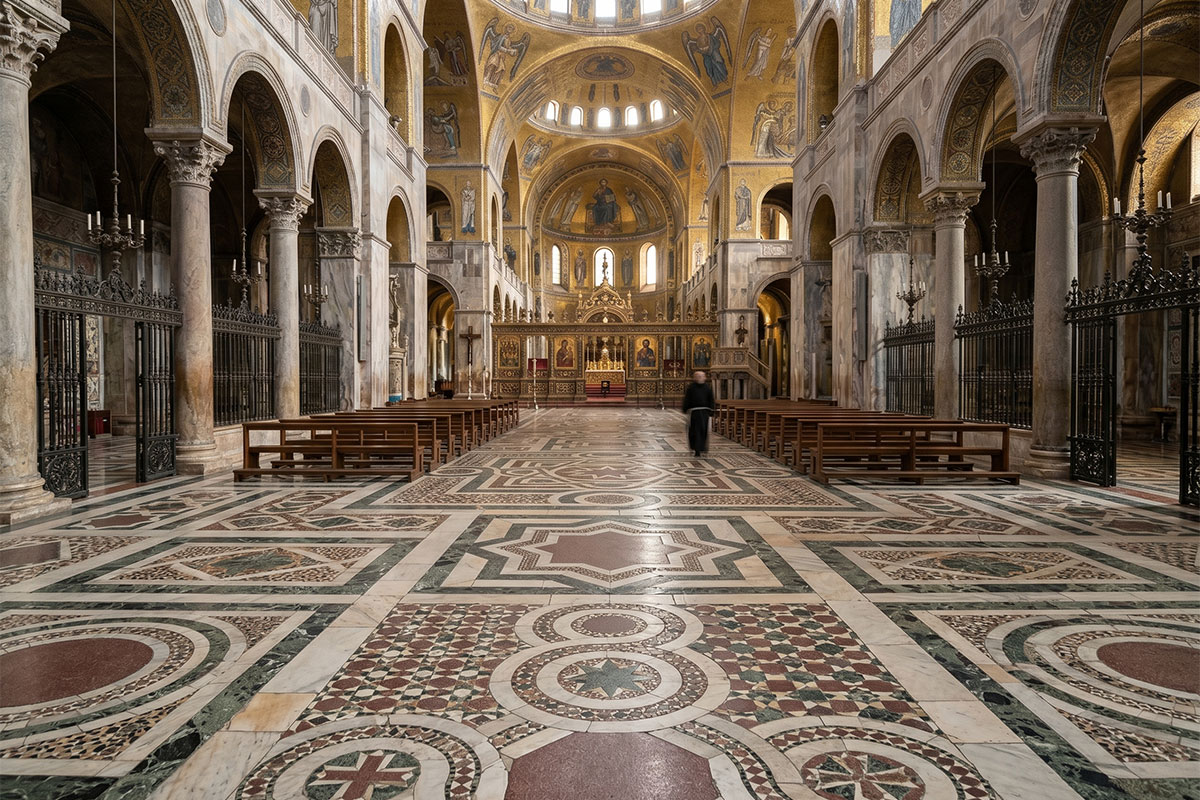
The marble floors of St. Mark's Basilica in Venice are not just simple flooring; they are a magnificent display of craftsmanship and artistry. These floors reflect a profound geometric design that embodies faith itself. Each pattern tells a story, merging aesthetics with spirituality and showcasing the artisans' dedication to their craft.
The Art of Marble Flooring
Marble has been a symbol of luxury and durability for centuries. St. Mark's, with its intricate marble floors, demonstrates how this material can be transformed into a canvas of divine geometry. The use of colorful marbles collected from various regions highlights not just the local craftsmanship but also the connections between different cultures and the shared pursuit of beauty. The basilica's marble floors, primarily constructed between the 12th and 15th centuries, showcase a variety of marble types, including those sourced from ancient Roman ruins and quarries across the Byzantine Empire.
Key Features of St. Mark's Marble Floors
- Unique Patterns: Each design in the basilica's flooring is carefully crafted, often depicting complex geometric shapes and symbols.
- Spiritual Significance: Many patterns contain religious motifs that enhance the spiritual atmosphere of the sacred space.
- Historical Craftsmanship: The artistry involved showcases centuries of tradition in marble masonry.
| Pattern Name | Description | Symbolism |
| Gothic Star | Intricate star shapes formed by interlocking geometric lines | Divine light and celestial harmony |
| Byzantine Cross | A bold cross design emphasizing the Christian faith | Faith and resurrection |
| Italian Mosaic | Colorful mosaic patterns representing nature | Connection to God’s creation |
Geometric Symbolism
The geometry found within the marble floors serves a higher purpose beyond mere aesthetics. Each geometric shape isn’t just a visual delight; it symbolizes various elements of faith. For instance, circles often represent eternity, while squares symbolize stability and foundation. This deliberate use of geometry reflects the belief in a divine order within the universe.
The Interplay of Faith and Geometry
In the context of St. Mark's Basilica, the marble floor designs encourage visitors to reflect on their faith. As individuals walk upon these magnificent surfaces, they are invited to contemplate the deeper meanings behind the patterns beneath their feet. The act of walking on such sacred ground becomes a meditative practice, connecting the physical and spiritual worlds.
Craftsmanship Behind the Patterns
The creation of these stunning marble floors requires exceptional skill and precision. Artisans spend years perfecting their trade, ensuring that each piece fits seamlessly into the larger design. The process involves selecting the right marble types and carefully cutting them to form specific patterns. This labor of love not only showcases the beauty of the marble but also the spiritual dedication involved in creating a sacred space.
Preservation and Conservation
Given their age and the constant flow of visitors, the marble floors of St. Mark's Basilica require ongoing preservation and conservation efforts. Experts employ various techniques to clean, repair, and protect the delicate surfaces. These efforts include regular cleaning with gentle solutions, careful patching of damaged areas, and the implementation of visitor management strategies to minimize wear and tear. The preservation of these floors ensures that future generations can continue to appreciate their beauty and spiritual significance.
Conclusion
The marble floors of St. Mark's Basilica are a testament to the intricate relationship between artistry and faith. As visitors gaze upon the stunning patterns, they are reminded of the divine geometry that connects all of creation. These floors are more than just a structural element; they are spiritual pathways leading believers closer to understanding their own faith through the beauty of craftsmanship.