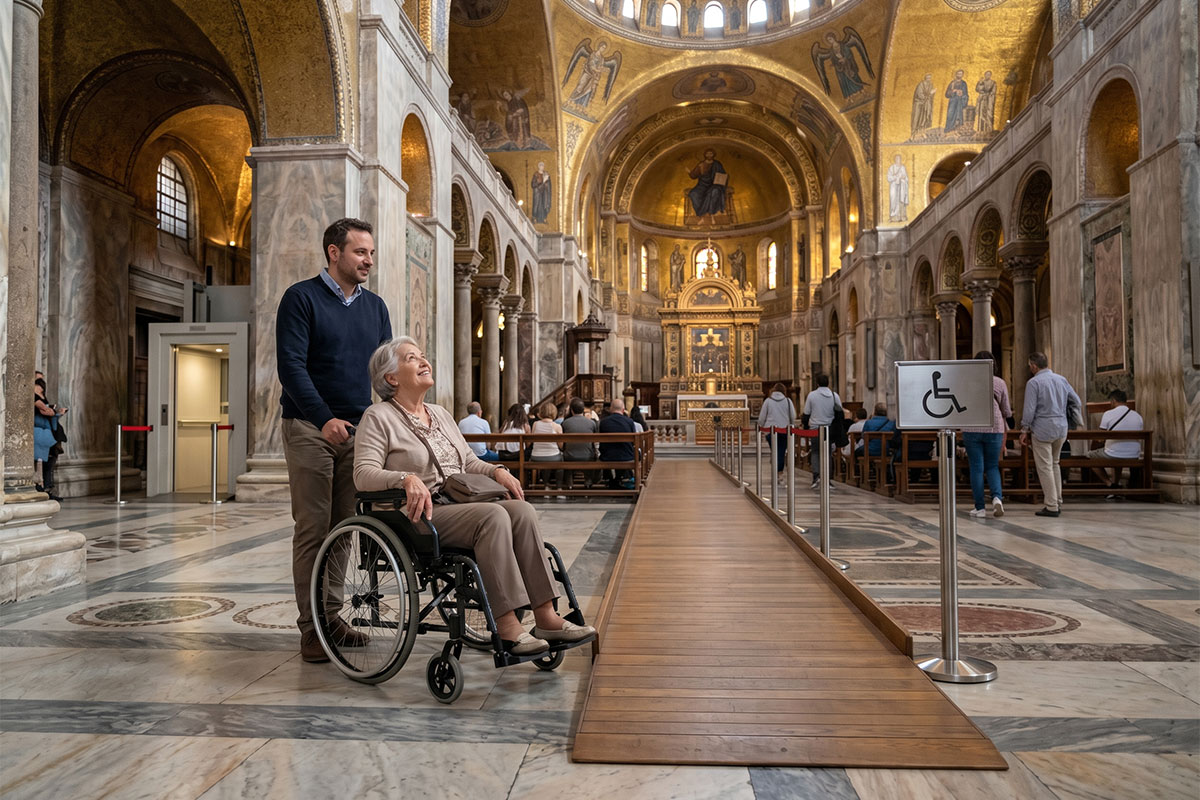
Venice is a city of stunning architecture, rich history, and charming canals, making it a popular destination for travelers around the world. However, for those with limited mobility, navigating the city's unique landscape can present challenges. This guide aims to provide helpful information for visitors with mobility issues, including wheelchair users and the elderly, ensuring a comfortable and accessible experience.
To better visualize accessible routes and features, consider searching online for user-generated photos and videos showcasing accessibility at various locations in Venice. This can provide a realistic preview of what to expect.
Getting to St. Mark's Basilica
When planning your visit to St. Mark's Basilica, it’s important to know about its accessibility features. The basilica, a masterpiece of Byzantine architecture, welcomes disabled visitors and offers various facilities to help them explore the site with ease.
- Ramps: There are designated ramps leading up to the entrance of St. Mark's Basilica, allowing wheelchair users to access the site without difficulty.
- Elevators: Although the historical architecture limits the installation of modern facilities, nearby locations have elevators that can assist visitors in accessing nearby areas. It's advisable to inquire about the specific locations of these elevators beforehand.
- Assistance: Staff members are available to offer assistance to those in need, ensuring a smooth visit.
Accessibility Features of St. Mark's Basilica
| Feature | Details |
| Entrance | Accessible via ramps for wheelchair users. |
| Interior | Spacious, allowing room for mobility devices. |
| Staff Assistance | Available to help visitors with mobility challenges. |
| Restrooms | Accessible restrooms are located nearby. |
Other Accessible Attractions in Venice
Aside from St. Mark's Basilica, there are several other attractions in Venice that cater to visitors with limited mobility. Consider visiting these spots:
- The Doge's Palace: Features accessible entrances and pathways, making it easier for wheelchair users to explore.
- Rialto Bridge: While not entirely accessible, ramps are available in surrounding areas that aid in reaching it.
- Gallerie dell'Accademia: An art gallery with facilities that accommodate disabled visitors.
Planning Your Trip
When visiting Venice, it’s crucial to plan ahead for accessibility. Here are some tips to make your visit as smooth as possible:
- Research access routes online before your visit to avoid surprises.
- Contact attractions in advance to inquire about their specific accessibility features.
- Consider using a mobility rental service for a convenient experience.
Getting Around Venice
Transport in Venice can be challenging, but there are means to navigate the city with ease:
- Water Taxis: Private water taxis are a great option for wheelchair users, providing direct access to various locations without the hassle of bridges. Book in advance to ensure availability.
- Public Transport: Vaporetto boats are generally accessible; however, check schedules and routes beforehand as some stop at stations with no ramps. ACTV, the public transport provider, offers detailed accessibility information on their website, including specific vaporetto lines and stops that are fully accessible.
- Gondolas: While traditionally not accessible, some gondola operators are beginning to offer adapted gondolas for wheelchair users. Inquire with local operators in advance to check for availability and make reservations.
Final Thoughts
Visiting Venice with limited mobility may seem daunting, but with preparation and a focus on accessibility, it can be a wonderful experience. Make sure to take advantage of the available resources, such as assistance from staff and accessibility features, to enjoy the beauty and history of this enchanting city. From St. Mark's Basilica's welcoming ramps to other accessible sites, Venice offers something for every traveler.